Servicemembers Civil Relief Act Centralized Verification Service Reviews
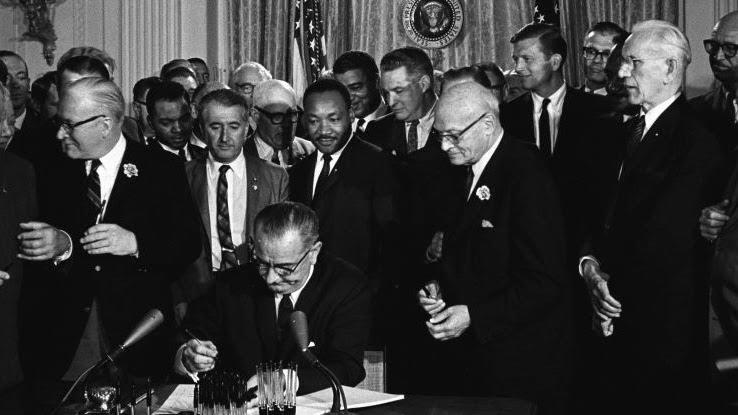
On June xv, 2020, the Supreme Court of the United states ruled on whether or not LGBTQ+ workers are protected from workplace discrimination under Title VII of the Civil Rights Act of 1964. For those unfamiliar with Title VII, its language specifically "bars employment bigotry based on race, religion, national origin and sex" — and information technology grants protection based on gender identity and sexual orientation.
You might be wondering: How did a ceremonious rights-era constabulary from the 1960s end upwards at the centre of one of this decade's first Supreme Court rulings on LGBTQ+ rights? Well, to empathise the full scope — and the lasting scope — of the Civil Rights Act of 1964's history, it's important to wait dorsum at its beginnings and sympathise what led upwards to its momentous enactment.
How Did the Civil Rights Act of 1964 Come to Exist?
Following the end of the Civil State of war, the 13th, 14th and 15th Amendments were passed in order to abolish slavery, grant formerly enslaved people U.S. citizenship and provide these new citizens the right to vote. However, in the decades that followed, numerous states, especially those in the South, created untold "legal" obstructions, from literacy tests to grandfather clauses, to stop Blackness Americans from voting and exercising the rights that were codification in those amendments.
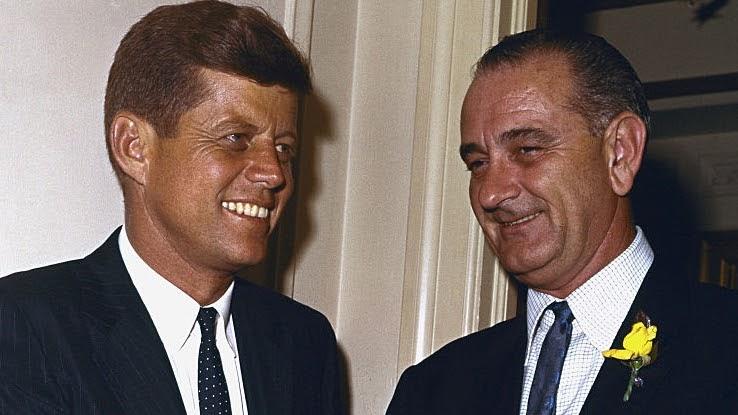
By the time President John F. Kennedy entered the White House in 1961, Black leaders similar Martin Luther King Jr., Rosa Parks and others made it clear that real modify was needed to protect Black Americans and their rights. At first, President Kennedy avoided any steps to finish segregation, but, by June of 1963, he outlined a civil rights bill that would non merely end segregation merely also restore — and protect — Black Americans' right to vote. When President Kennedy was assassinated on November 11 of the same year, his vice president and successor Lyndon B. Johnson vowed to pass the pecker.
The Civil Rights Act of 1964 equally nosotros know it today included numerous provisions: It banned voter registration requirements, like literacy tests and poll taxes, and aimed to finish discrimination and segregation in public schools, trade unions, institutions that did business organization with the federal government and businesses that participate in interstate commerce. Additionally, the act also banned discrimination when it came to federal assistance program eligibility.
Opposition to the bill was fierce. Southern congressmen chosen it a violation of private and country rights, and at that place were numerous attempts to sabotage the nib with then-called "poison pill" amendments — additions to a law intended to turn other lawmakers against it. One such amendment was proposed by Congressman Howard Westward. Smith of Virginia. He opposed both segregation and women's rights but figured that, by introducing language into the neb banning discrimination based on sex as well as race, color, religion and national origin, he could sink the bill.
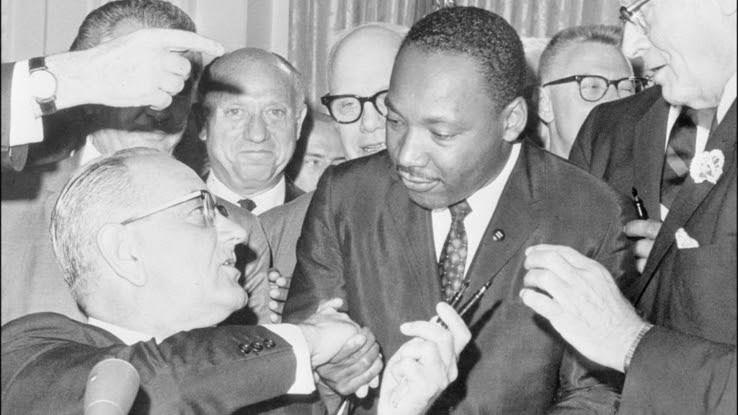
Much to Smith's chagrin, President Johnson and Congress were determined to laissez passer the nib anyway, despite shakier back up for the language based on sexual practice. While a group of senators held the longest filibuster in U.S. history — 60 days in full — to prevent the beak from becoming police, deals were made behind the scenes to win over opponents, and the bill moved to Johnson's desk-bound. Martin Luther King Jr., who was in the room with the president when he signed the bill into constabulary, described that moment as "a 2d emancipation."
What Happened in the Wake of the Human activity'south Enactment?
Just because the nib passed, that didn't mean all of the opposition all of a sudden vanished. In fact, in the wake of its enactment, the act was brought all the manner to the Supreme Court, where the justices confirmed it to be constitutional. As a effect, white segregationists staged protests, committed acts of violence and voted a slew of pro-segregation lawmakers into function. Johnson, a Democrat, famously mused, "It is an important gain, simply I think we but delivered the South to the Republican Political party for a long fourth dimension to come."
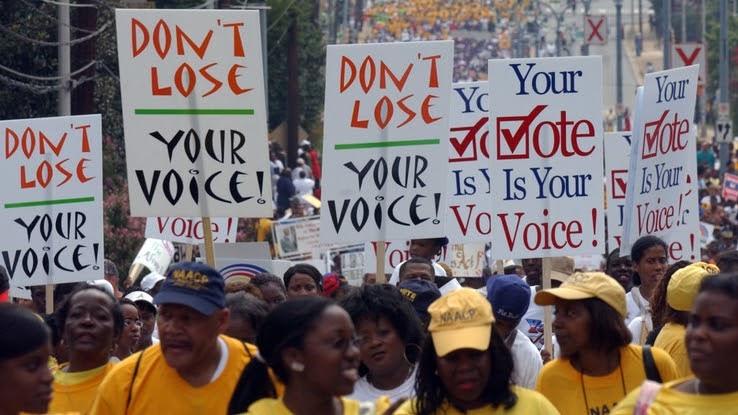
On the flip side, the law likewise led to the passage of further landmark pieces of legislation, including the Voting Rights Human activity of 1965, which further strengthened protections against discriminatory voting laws, and the Off-white Housing Act of 1968, which made bigotry in selling, renting or buying holding illegal. Somewhen, the act itself was amended in order to extend protections to seniors and disabled Americans, and, nether Title IX, women* gained protection from discrimination based on sexual practice in education programs or activities that receive federal financial assistance, including sports.
*At the time of the subpoena'south add-on, the aim was to put men and women on equal ground, just, today, the Supreme Court's reading of the Civil Rights Act seems more than poised to protect folks of all genders.
What Is the Human action'south Legacy Today?
As mentioned in a higher place, the Supreme Court ruled on whether or not Title VII protects LGBTQ+ workers from workplace discrimination. Thank you to the half dozen-3 majority ruling, Title Vii's language now firmly applies to discrimination based on sexual orientation and gender identity. For the majority, Justice Neil M. Gorsuch wrote, "An employer who fires an individual just for being gay or transgender defies the law."
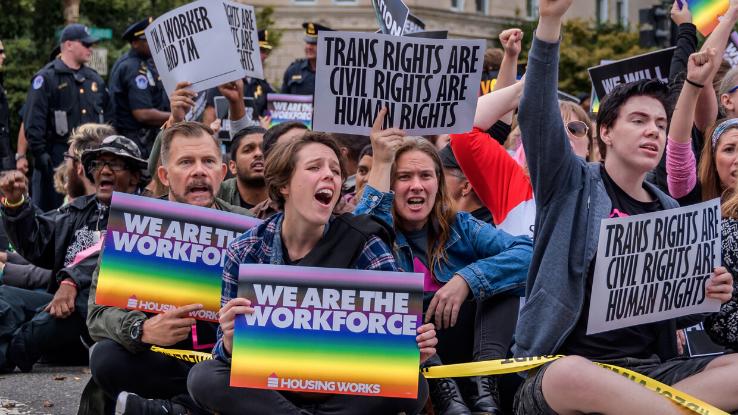
The ruling is a landmark for many reasons, but chief among them is that this was the first major case that outrightly protected transgender rights. Before, it was legal in more than than one-half of u.s.a. to fire workers for existence gay, bisexual, transgender or queer. That is, even though gay union has been the law of the land since 2015, LGBTQ+ folks in some states could become married over the weekend — so fired on Mon, only for living openly and truthfully with their same-sexual practice spouse.
"This is a simple and profound victory for [LGBTQ+] civil rights," Columbia law professor Suzanne B. Goldberg told The New York Times. "Many of u.s. feared that the court was poised to gut sexual activity bigotry protections and let employers to discriminate based on sexual orientation and gender identity, yet it declined the federal government'south invitation to accept that damaging path."
Of course, despite these victories, the Civil Rights Act of 1964 hasn't fully reconciled inequality in America. As the murder of George Floyd and many other Black Americans at the hands of law has shown, people in the United States still get treated in fundamentally dissimilar ways based on peel color. Additionally, inequality continues to stalk from laws and practices that, in the past, expressly prevented Black Americans from owning holding and making money.
Additionally, the Ceremonious Rights Act itself has besides been weakened by certain court rulings, such equally Shelby Canton five. Holder, wherein the court ruled that states and counties with a history of discriminatory voting laws no longer needed clearance from the federal regime to alter their voting laws. Needless to say, voter purges, stricter voter ID laws, rollbacks on early voting and registration and other forms of voter suppression emerged, making it harder for people of color to vote. Despite these shortcomings, notwithstanding, the Civil Rights Act of 1964 has cemented its place every bit a quintessential piece of legislation — i that aims to create a meliorate life for all Americans, even if we still take quite a bit of work to do to make that vision a reality.
Source: https://www.reference.com/history/what-was-civil-rights-act-1964?utm_content=params%3Ao%3D740005%26ad%3DdirN%26qo%3DserpIndex
0 Response to "Servicemembers Civil Relief Act Centralized Verification Service Reviews"
Post a Comment